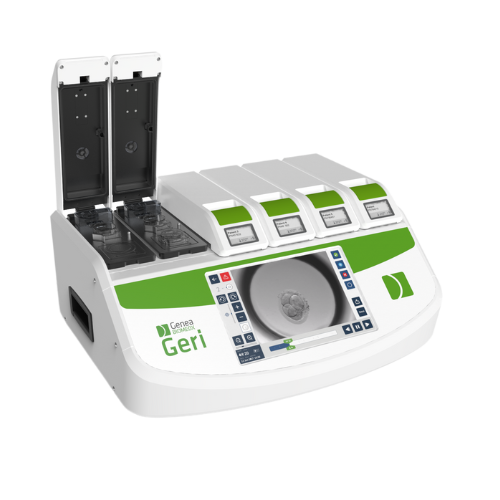
An incubator is a specialized device that creates a controlled environment with stable temperature, humidity, and gas levels to support biological growth and research applications. Incubators are widely used in medical, laboratory, and industrial settings for cell culture, microbial growth, and embryo development.
The primary purpose of an incubator is to maintain an optimal environment for biological samples, ensuring consistent growth, preservation, and research accuracy. It is used in scientific studies, medical diagnostics, fertility treatments, and pharmaceutical testing .
In IVF (In Vitro Fertilization) procedures , incubators play a crucial role in:
• Embryo culture – Providing a stable temperature (37°C) and CO₂-regulated environment for embryo development.
• Gamete storage – Preserving sperm, eggs, and embryos under optimal conditions for a period of 3-5 days.
• Embryo viability – Ensuring a contamination-free and controlled atmosphere to improve implantation success.
A time-lapse incubator in ,b>in vitro fertilization (IVF) is an advanced device equipped with integrated imaging systems that continuously monitor and record the development of embryos without the need to remove them from the controlled environment. This technology allows embryologists to observe critical developmental milestones, enhancing the selection of viable embryos for transfer.
Yes, time-lapse imaging records detailed embryo growth patterns, helping embryologists assess cell division timing, fragmentation, and morphology more accurately, leading to better embryo grading and selection.
A multi-chamber time-lapse incubator allows embryos to be cultured separately, minimizing cross-contamination risks and maintaining individualized conditions, which enhances embryo development.
The Geri® time-lapse incubator by Genea Biomedx features six individual chambers, each with a dedicated high-resolution camera and microscope. This setup provides continuous, undisturbed monitoring of each embryo's development, capturing key stages without exposing embryos to external environmental changes. It allows us to store and preserve embryos at or near body temperature providing an optimized environment for their development.
The Geri® incubator offers several advantages in IVF procedures:
• Undisturbed Incubation: Each of the six individual chambers is independently controlled, minimizing disruptions and maintaining stable culture conditions.
• Integrated Embryo Monitoring: Continuous time-lapse imaging allows for detailed assessment of embryo development without removing them from the incubator.
• Stable Culture Conditions : Advanced features ensure optimal temperature, gas levels, and humidity, supporting better embryo viability and quality.
Yes, the Geri® incubator supports individualized embryo culture by providing six separate chambers, each dedicated to a single patient's embryos. This design minimizes the risk of cross-contamination and allows for personalized monitoring and culture conditions.
The Geri® incubator maintains stable culture conditions through several features:
• Temperature Control: Double heating elements and rapid recovery systems ensure consistent temperatures.
• Gas Regulation : Individual gas lines and CO₂ sensors in each chamber maintain optimal gas concentrations.
• Environmental Monitoring: Integrated sensors continuously monitor critical parameters, triggering alarms if conditions deviate from set points.
The Geri® incubator includes several safety features to protect embryo development:
• Fail-Safe Mechanisms: Redundancies and alarm functions ensure stable conditions are maintained.
• Environmental Sensors : Continuous monitoring of temperature and gas levels with immediate alerts for any abnormalities.
• Modular Design: Individual chambers allow for isolated issues to be addressed without affecting other embryos.
The Geri® incubator is designed as a compact, benchtop device with a minimal footprint, allowing for easy integration into laboratory settings. Its user-friendly interface and modular design facilitate efficient workflows and maintenance.
Choosing the best incubator for IVF requires evaluating several key factors to ensure optimal embryo development and laboratory efficiency:
• Temperature & Gas Stability – The incubator must maintain a consistent 37°C temperature and precise CO₂ and O₂ levels to support embryo viability.
• Time-Lapse vs. Conventional – Time-lapse incubators offer continuous monitoring without disturbing culture conditions, while conventional incubators require manual observation.
• Individual vs. Shared Chambers – Multi-chamber incubators minimize cross-contamination and allow personalized embryo culture for better results.
• Humidity Control – Preventingevaporation is crucial to maintaining culture media stability and embryo health.
• Ease of Use & Maintenance – A user-friendly interface, automated alerts, and efficient cleaning system can improve lab workflow and reduce downtime.
Discover how Hana Health’s cutting-edge IVF solutions can transform your lab. Book a personalized demo with our experts.